
Personal Styling in Berlin: When Advice Truly Helps
Personal styling isn’t necessary for every purchase. Sometimes you try on a garment and know it belongs in your life. But there are moments when the mirror doesn’t show the answer: the size fits technically, yet the silhouette feels unfamiliar; the fabric is beautiful, but you can’t picture it in your working week; or your wardrobe still fits while no longer reflecting the person you’ve become.
From my perspective at SUSUMU AI, this is where good advice begins—not with rules about what you should wear, nor with replacing an entire wardrobe. It starts by understanding the decision that feels difficult.
Personal styling is most useful when the question is specific
A consultation works best when it has a real starting point. Perhaps you need clothing for a new professional role. Maybe an important occasion is approaching, or a life change has made familiar combinations feel wrong. You might also be choosing between two sizes, fabrics, or silhouettes and want to understand what will serve you beyond the fitting room.
The purpose isn’t to hand over your judgment. It’s to refine it. A calm outside perspective can separate three questions that often get mixed together:
- Does the garment move comfortably with your body?
- Does it support the way you want to appear?
- Does it connect with the clothes and situations already in your life?
When these questions are considered together, a purchase becomes less about a persuasive first impression and more about lasting use.
When life has changed before your wardrobe
A new role, return to work, increased responsibility, or simply a different rhythm can expose gaps in your wardrobe. The clothes may still fit well and feel good—but what has changed is their relationship to daily life.
Shopping without direction often creates isolated pieces. Personal styling can identify the few elements that would make the greatest difference: perhaps a jacket that adds quiet structure, a blouse whose collar frames the face, or trousers that work for sitting, walking, and traveling without constant adjustment.
This doesn’t require a complete reinvention. One carefully chosen piece can give familiar garments new context. If you’re still defining that direction, our article on finding a style that suits your life is a useful starting point.
When fit is more than a size label
Size is only one part of fit. Shoulder placement, armholes, length, balance, and how fabric moves all matter. A garment can close comfortably and still pull when you sit. Another may look generous on the hanger but become precise once wrapped or belted.
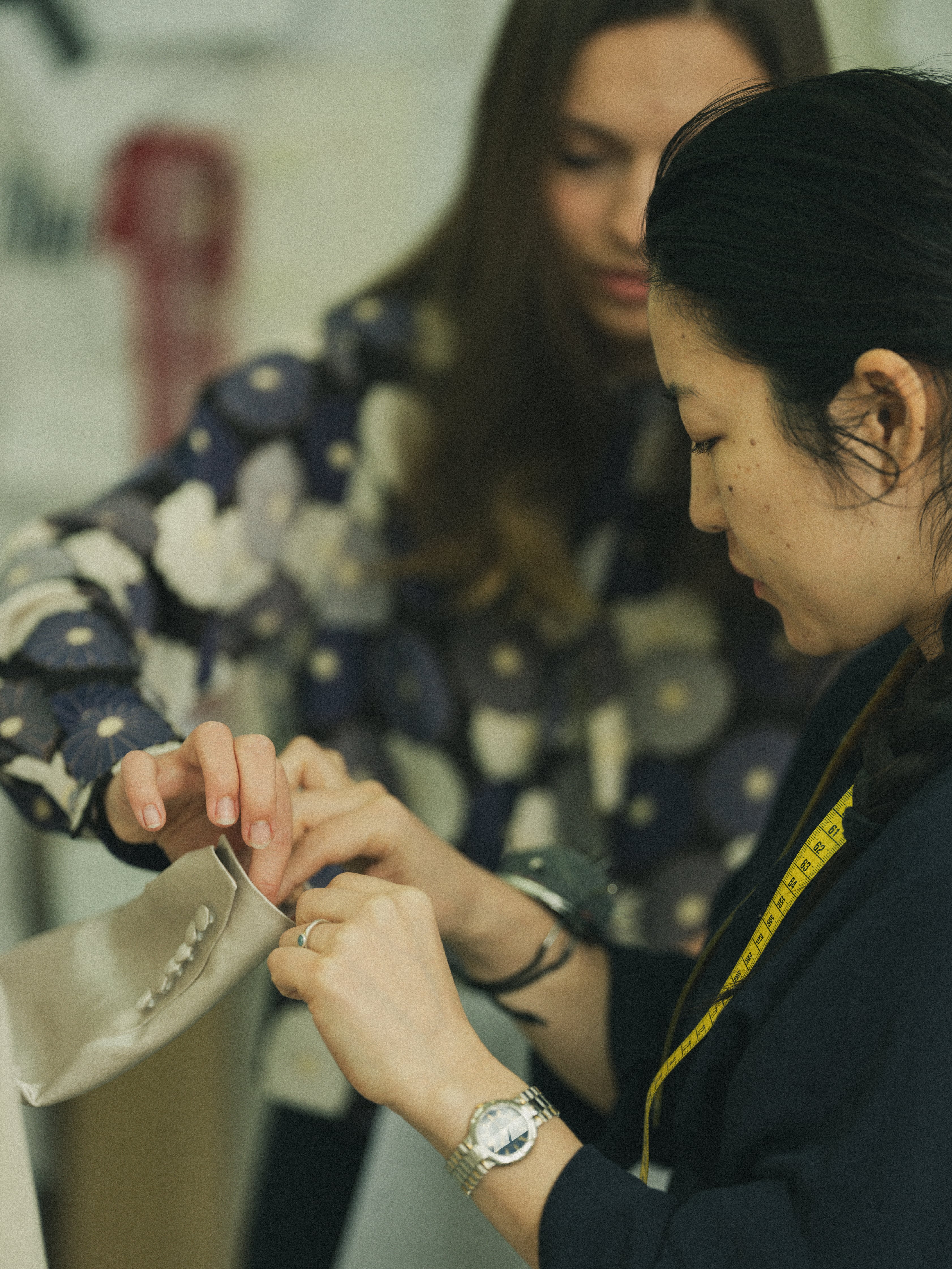
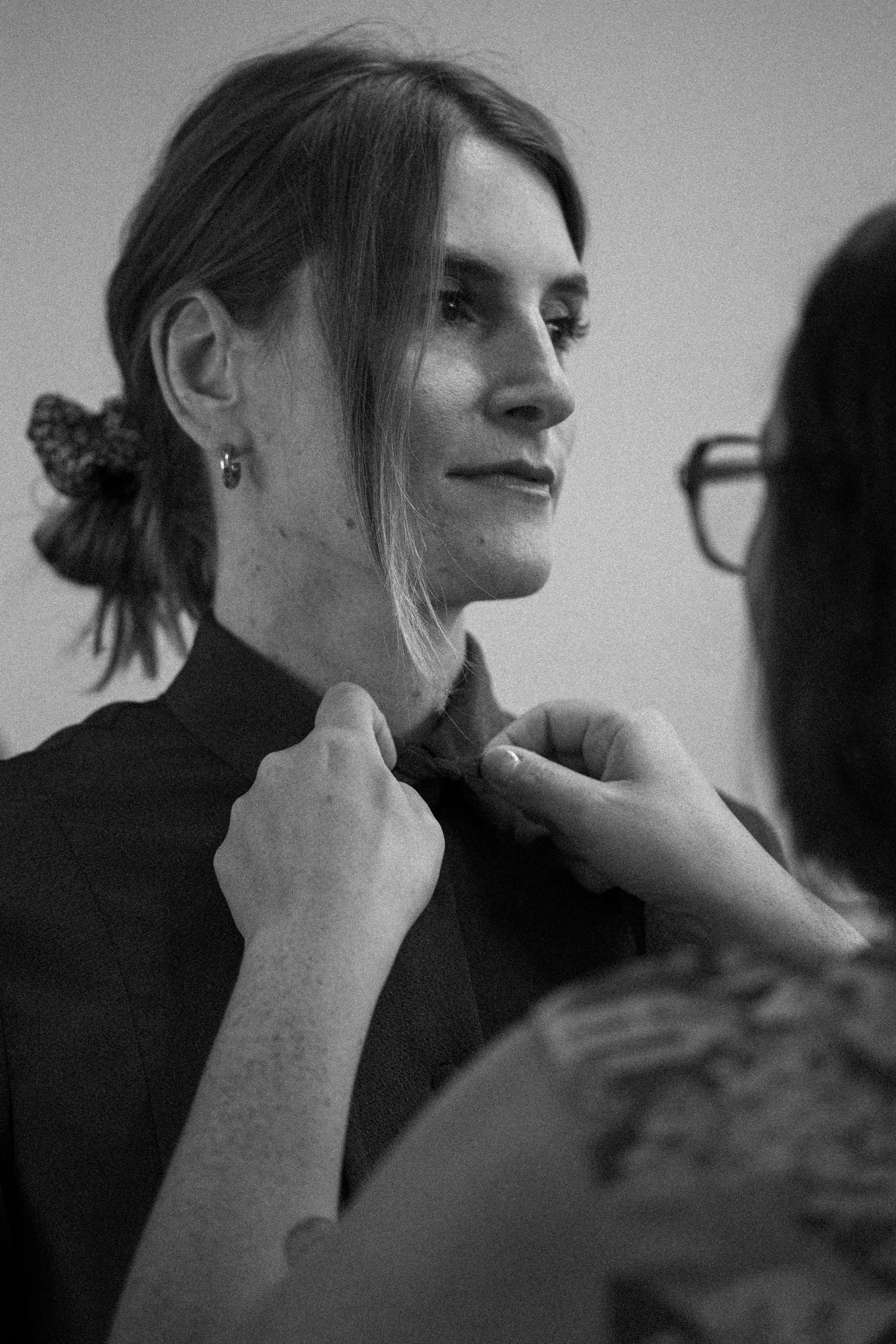
In an atelier consultation, I look at the garment in motion. Can you lift your arms? Does the neckline stay where it should? Do you feel the need to correct it while speaking or walking? Clothing that repeatedly asks for attention takes focus away from you.
Advice is especially helpful for unfamiliar constructions: asymmetrical lines, wider silhouettes, wraps, or distinctive collars. The aim isn’t to persuade you into an unusual shape. It’s to show honestly how that shape works on your body and whether it feels natural.
When fabric changes the decision
Two garments with similar outlines can behave completely differently because of material. Weight, surface, drape, and resilience determine whether a silhouette feels structured, fluid, quiet, or expressive. They also influence care and practicality across situations.
Fabric advice should be concrete: how does it feel against your skin? How does it respond after sitting? What care does it require? Does it work with the layers you already wear? Our guide to recognising quality clothing offers further criteria for evaluating fabric, cut, and workmanship.
In the atelier, material and construction are considered together. A beautiful fabric isn’t automatically right for every cut—just as an interesting cut can’t compensate for a material that doesn’t support it.
When an occasion creates too much pressure
Important meetings, presentations, celebrations, and interviews often make clothing feel more consequential than usual. The common reaction is to search for a perfect outfit. Yet the better question is: what does this day ask of you?
You might need authority without distance, visibility without theatricality, or ease across several settings. A consultation can translate those needs into practical decisions about proportion, color, movement, and layering. It can also prevent the familiar mistake of buying an impressive garment that works for a photograph but not for the hours around it.
A test fitting should include sitting, walking, and reaching—especially when relevant, the jacket or shoes you intend to wear. The garment must accompany the whole occasion, not just the moment in front of the mirror.
When personal styling is probably not needed
Advice shouldn’t create uncertainty. If a garment feels right, works with your wardrobe, moves well, and suits its purpose, you might not need a consultation. Nor should styling become a list of prohibitions based on age, body type, or rigid color categories.
Good advice leaves you with greater independence. You should understand why a proportion works, what a fabric contributes, and which details you want to repeat. If you leave feeling only an expert can make your decisions, the consultation missed its purpose.
What to bring to a styling consultation
You don’t need a finished vision. It’s enough to bring honest information:
- The situations you’re dressing for
- One or two garments you wear often
- A piece you like but rarely use
- Practical needs: movement, travel, care, or layering
- Photographs of combinations you feel comfortable in
These references reveal your real habits—what colors and proportions already connect, and where a new piece could genuinely extend your wardrobe.
The SUSUMU AI atelier perspective
At SUSUMU AI, we see consultation as part of the making process. Our clothing combines clear European lines with principles like wrapping, space around the body, and subtle asymmetry. You can read more about this design language in Japanese fashion from Berlin.
Because these details often reveal themselves through movement and touch, conversation sometimes matters more than product photographs. We can discuss fit, fabric, and styling in relation to your existing wardrobe—whether the meeting takes place in Berlin or online.
If you’re choosing between sizes, fabrics, or silhouettes, you can book a personal consultation with our atelier. There’s no pressure to rebuild your wardrobe. The aim is a clearer decision.
Frequently asked questions
What happens during a personal styling consultation?
We begin with your occasion, daily routine, and the clothes you already rely on. Then we look at fit, proportion, fabric, and possible combinations. The focus is on concrete decisions—not a fixed style formula.
Is personal styling only useful for a complete wardrobe change?
No. It can be most valuable for one specific decision: an unfamiliar silhouette, an important occasion, a size question, or a piece that connects several parts of your wardrobe.
Can a styling consultation take place online?
Yes. An online conversation can clarify purpose, proportions, combinations, and size questions. For tactile fabric comparisons and fittings, an atelier appointment offers additional information.
Should I buy something after the consultation?
No. A useful consultation helps you decide—including when the right decision is not to buy. It creates clarity, not pressure.
A clear decision is more valuable than more choice
Personal styling is worthwhile when it resolves a real question. Its value lies not in producing a new version of you, but in making your own criteria visible.
A good consultation doesn’t tell you who to become. It helps you recognize which clothes already support the way you want to live and appear.
Alisa Designer and co-founder of SUSUMU AI